Practical guides
Bullpen app is a social onchain trading app for Jupiter Ultra token execution
Bottom line: All-in-one onchain trading app for tokens, perps, and prediction markets, with shared trade posts earning $BULL points.
Bullpen app is a social onchain trading app that routes token trades through Jupiter Ultra, adds Hyperliquid perps and prediction-market discovery, and rewards shared trade posts with $BULL points. It is built around fast execution, visible trader performance, wallet portability across SVM and EVM ecosystems, and a feed where trades become public signals instead of private screenshots.
Jupiter Ultra routing is the token-trade engine
The token side uses Jupiter Ultra for execution, which matters because Solana swaps live or fail on routing quality, transaction landing, priority fees, Jito tips, and slippage handling. Bullpen app packages those moving parts behind a simple buy flow, so the trader focuses on the asset, size, and timing while the system optimizes the route in real time.
That design fits active token traders who move quickly through memecoins, new Solana launches, and liquid majors. A manual swap flow forces users to choose routes, retry failed transactions, and adjust slippage during volatile windows. Here, the app treats execution as a performance layer, not a form field exercise.
$BULL points turn shared trades into a reputation loop
The social layer is more than a comment stream. Traders post their trades to X from the interface, and those shared posts earn $BULL points for contributing trade ideas, calls, and public proof of activity. Bullpen app connects the trade, the wallet-backed position, and the public post into one loop, which gives followers a clearer signal than a cropped profit screenshot.
$BULL points should be read as a platform points program, not as a promise of token value. The useful part for a trader today is the behavior it encourages: publish the position, build a track record, and make performance visible while the trade is still relevant.
Perps and Hyperliquid insights add another market layer
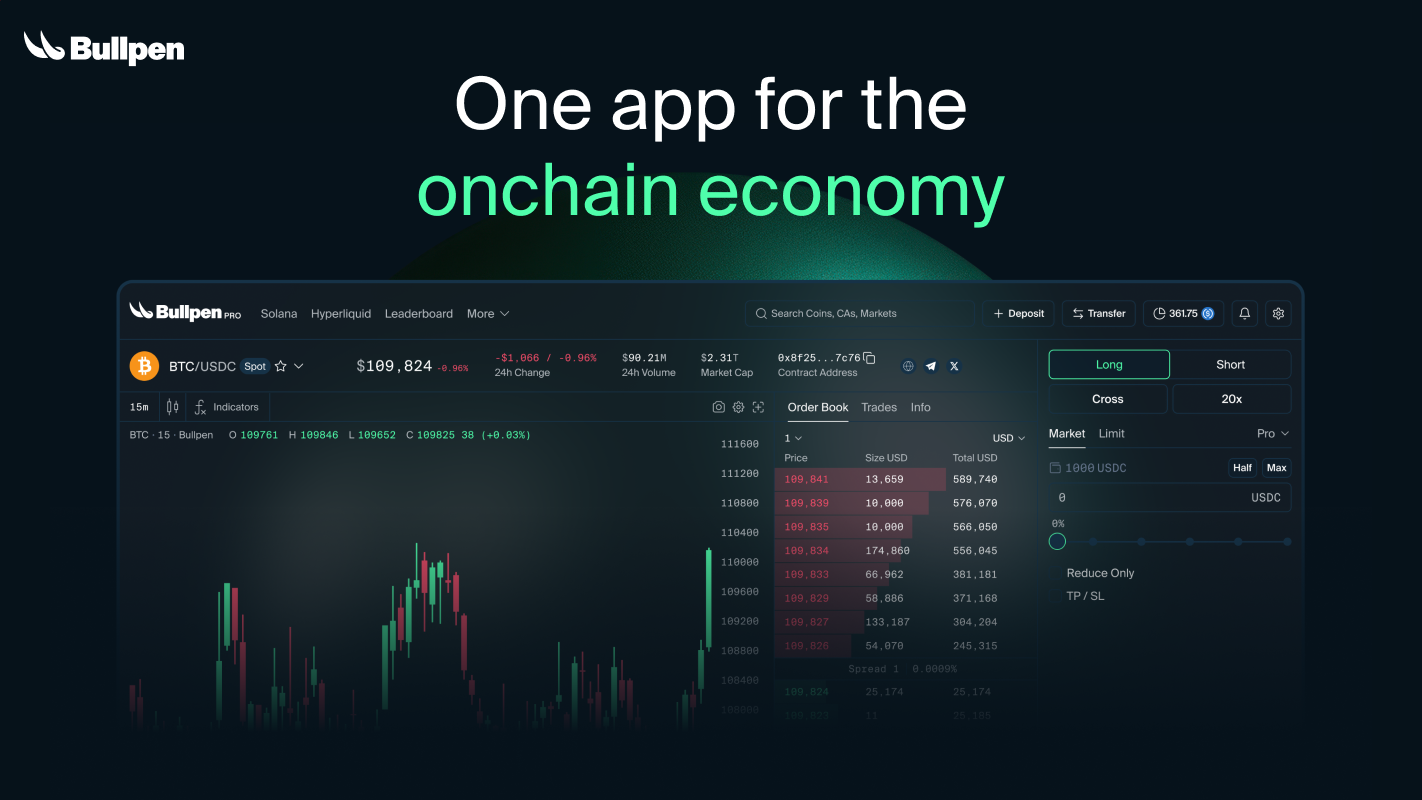
Perpetual futures are presented alongside spot token activity, with Hyperliquid supplying the context traders expect from a perp venue. Net positioning, open interest, and volatility metrics help explain where leverage is gathering before a move becomes obvious in social feeds.
This is where Bullpen app differs from a plain swap screen. A token trader watching a Solana asset can also read broader speculative appetite from perp positioning and use that information before deciding whether to chase, fade, or wait. The same dashboard supports quick action and market awareness without jumping between unrelated tabs.
Runners and Whales are built for discovery before the feed catches up
Discovery tools give the app its sharper edge. Runners highlights breakout tokens before they dominate X, while Whales tracks smart-money inflows and shows what large wallets are buying. Those views serve the moment when a trader has a thesis but needs evidence that attention and capital are arriving.
Fast discovery is useful only when it connects to execution. In Bullpen app, the path from signal to order is short: spot a runner, inspect wallet flow, place a buy, set a limit order, or build a DCA entry. The workflow is tuned for traders who treat timing and transaction reliability as part of the trade, not a separate chore.
Limit orders and DCA orders support entries beyond market buys
Market buys work for urgency, but better entries require structure. Limit orders let a trader target a pullback without watching the chart all day. DCA orders split an entry across time, which reduces the risk of committing the whole position at one local price.
The official product messaging says these advanced order types are offered at no additional cost. That is meaningful for smaller traders because extra platform fees turn frequent position management into a drag. Network costs and route economics still matter, but the app does not frame order control as a premium-only feature.
Wallet import covers SVM and EVM activity
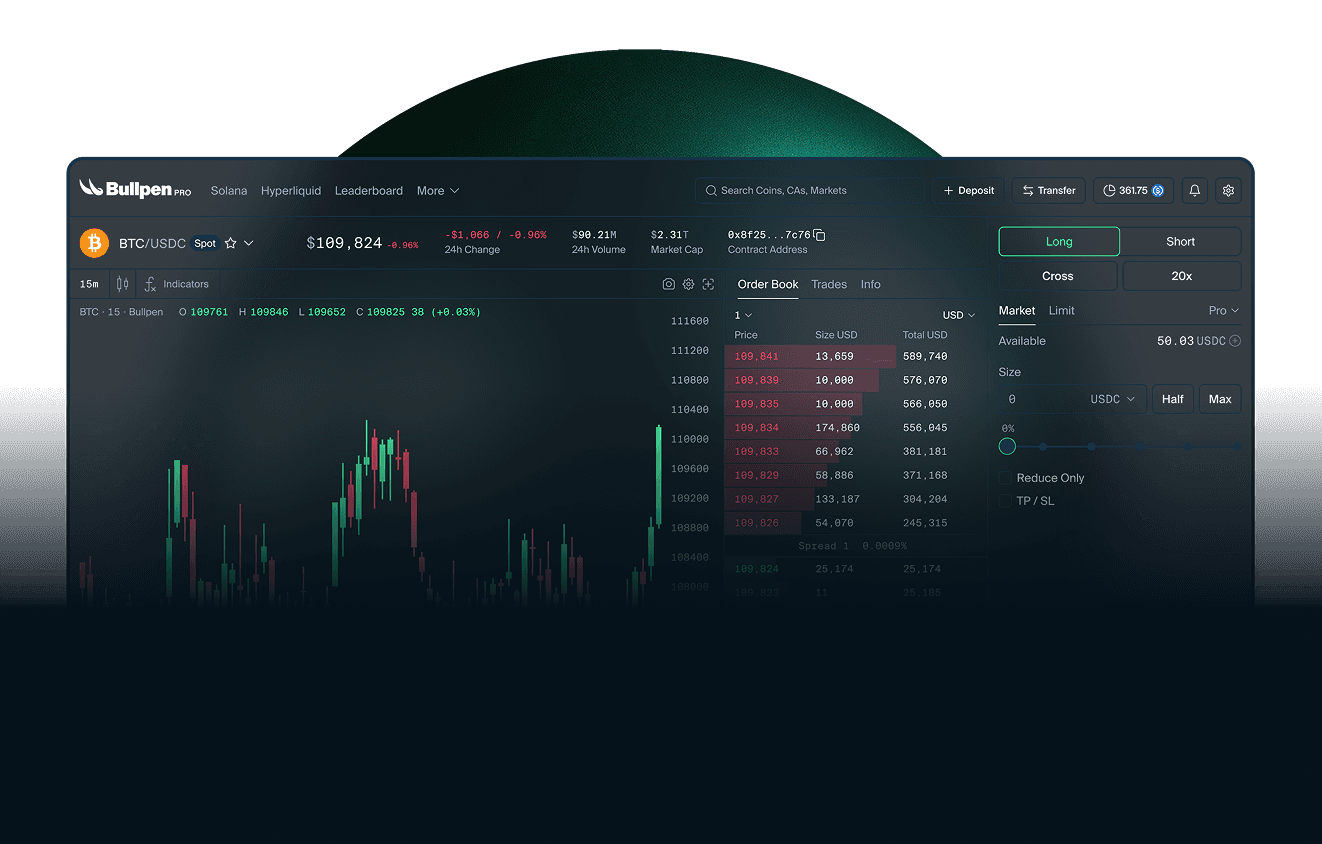
Wallet support spans SVM and EVM addresses, so users can bring Solana and Ethereum-style wallets into one place. That matters for traders who follow liquidity across chains instead of living inside a single wallet extension. The account view becomes a practical control room for balances, positions, and trade history.
Because Bullpen app is built for imported wallets, a new user should start by connecting the wallet they already use for active trading, then add other wallets only when they need a fuller view. Keeping the first setup narrow makes approvals, balances, and notifications easier to understand.
Same-day ACH lowers the need for a centralized exchange detour
Fiat on- and off-ramps are part of the pitch. The app says users can deposit to or withdraw from a bank through same-day ACH, which gives U.S.-style bank movement a direct place in the trading workflow. That reduces the habit of moving from bank to centralized exchange, then from exchange to wallet, then finally into a trade.
This feature is especially relevant for users who already trade onchain but still rely on a separate venue for cash movement. It does not remove wallet risk or market risk, but it makes funding and exiting less fragmented when the feature is available to the user's account and region.
Public performance changes how traders evaluate each other
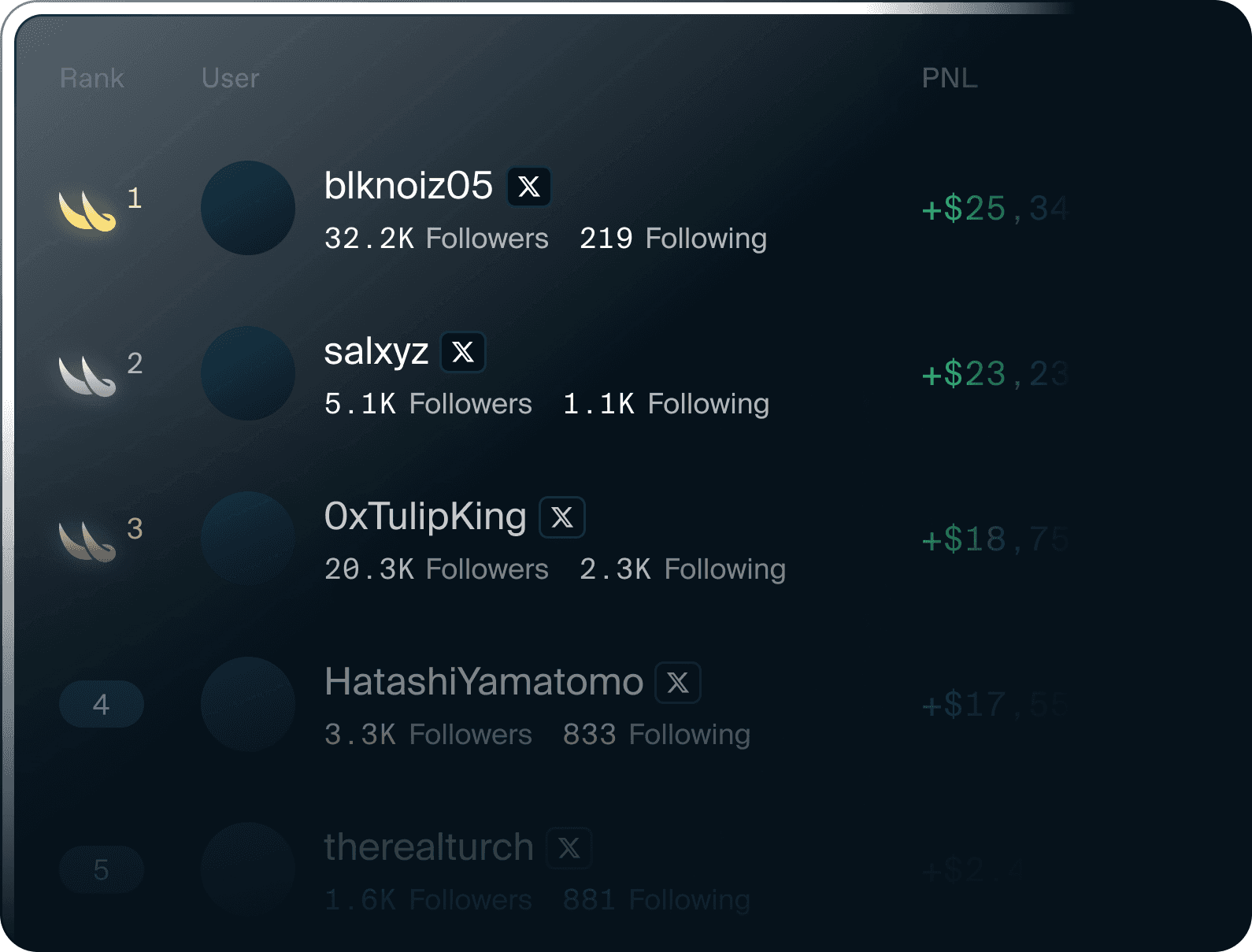
Leaderboards, follower counts, and visible current positions make the social product more performance-based. Instead of judging a trader by confident posts alone, users see whether that trader is actually positioned, how their calls age, and whether their audience follows repeatable skill or one lucky entry.
That public layer also changes incentives. A trader who wants followers has a reason to post entries before the move, manage reputation after the move, and compete on a visible record. Bullpen app uses that behavior to make discovery social without reducing the product to a chat room.
How to start with one clean trading workflow
A practical first session is simple: connect one active wallet, check the token discovery views, inspect a token route, and place a small spot trade before using perps or more complex orders. Once the browser session is synced with mobile notifications, the user can follow fills, order status, and market movement without staying glued to the desktop.
- Use Runners to find tokens gaining momentum.
- Check Whales before assuming a move has real backing.
- Review route, slippage, and expected landing behavior before sending a token trade.
- Use a limit order when a target entry matters more than instant fill.
- Share a trade only when the public record matches the position you want to stand behind.
The strongest use case is active onchain trading where discovery, execution, and public credibility belong together. Bullpen app brings those pieces into one interface, with Jupiter Ultra for token fills, Hyperliquid context for perps, prediction markets for another lane of speculation, and $BULL points for social participation.
Frequently asked questions about Bullpen app
Which wallets work best for the app's SVM and EVM import flow?
The best wallet choice is the one already holding the assets you trade actively. The app supports importing SVM and EVM wallets, so Solana-oriented wallets and Ethereum-style wallets fit the intended workflow. Start with one wallet that has a clear purpose, such as spot Solana token trading, then add other wallets after you understand how balances, approvals, and notifications appear inside the interface.
Can shared trades earn $BULL points without trading perps?
Yes. The $BULL points mechanic is described around sharing trades and alpha, not only around perpetual futures. A user focused on token swaps can still use the social posting flow when sharing eligible trades to X from the app. Perps and Hyperliquid insights add another market lane, but the points loop is tied to public trade sharing and platform participation.
Same-day ACH deposits on Bullpen app require what account setup?
Same-day ACH requires a supported bank connection and an eligible account flow inside the app. The feature is meant to move funds between a bank and the onchain trading environment without routing through a centralized exchange first. Availability depends on the user's account setup and region, so the relevant check is whether the ACH option appears during onboarding or funding.
Are Hyperliquid insights the same thing as opening a perp position?
No. Hyperliquid insights show market context such as net positioning, open interest, and volatility metrics, while opening a perp position creates leveraged market exposure. The insights are useful before deciding whether to trade because they show where speculative pressure is building. A user can read those metrics without treating every signal as a reason to enter a futures trade.