Practical guides
Bullpen is a real-time execution layer for token trades that tunes Jito tips and slippage
Bottom line: All-in-one onchain trading app for tokens, perps, and prediction markets, with Jupiter Ultra execution tuning Jito tips and slippage.
Bullpen is a crypto trading app for token swaps, perps, and prediction markets, but this page focuses on its token-trade execution: it routes swaps through Jupiter Ultra, adjusts priority fees, applies Jito tips, and manages slippage settings as the transaction prepares to land. That matters most on Solana, where a good quoted price still fails if the transaction misses the next busy block or arrives with settings that do not match market speed.
The strongest use case is the moment between deciding to buy a token and getting a confirmed fill. A trader sees a route, signs from an imported SVM or EVM wallet, and the app handles the execution details that usually force people into manual trial and error. The design suits fast markets: new token breakouts, sudden liquidity shifts, dip entries, and follow-through trades from wallet-flow signals.
A Solana token trade tuned before it lands
A swap quote is only one part of an onchain order. On Solana, the transaction also needs a landing strategy, because high-demand slots fill quickly and validators prioritize transactions that carry appropriate incentives. Bullpen treats this as part of the trade flow rather than a separate advanced setting. The app adjusts the values attached to the transaction while the user stays focused on direction, size, and timing.
That approach fits meme coins and volatile launches, where seconds change the fill price. A low tip or stale slippage band leaves a trade pending while the market moves. An overly loose slippage setting fills at a price the trader did not intend. The point is balance: enough room for execution, tight enough boundaries to keep the trade aligned with the quote.
Where Jupiter Ultra enters the route
Jupiter Ultra provides the routing and execution backbone for token swaps. It searches available liquidity and builds routes across venues, so the trader does not manually compare pools every time a token changes direction. Bullpen layers its interface, signals, order controls, and fee tuning around that engine, creating a single path from discovery to execution.
For a user, this means the swap screen works less like a static quote box and more like a live trading surface. The route, landing assumptions, and final confirmation are part of the same action. A token that trades across fragmented liquidity benefits from this structure because the best available path shifts as other wallets buy, sell, and rebalance pools.
Priority fees, Jito tips, and slippage in one execution decision
Priority fees and Jito tips both influence how a Solana transaction competes for attention, but they do different jobs. Priority fees pay for compute-unit priority inside the network fee market. Jito tips add an incentive through Jito's block engine ecosystem, a common route for transaction landing and MEV-aware execution. Slippage sets the price boundary around the swap itself.
Those three settings interact. Raising only the slippage ceiling without improving landing quality exposes the trade to price movement without solving the confirmation problem. Raising only the tip on a market that is moving violently still leaves a fill exposed if the allowed price range is too narrow. Bullpen connects these decisions so the transaction has a coherent execution profile instead of three unrelated toggles.
- Priority fee: improves the transaction's position in a congested Solana fee market.
- Jito tip: incentivizes block-engine inclusion for faster landing.
- Slippage: defines the maximum price movement accepted for the swap.
- Route quality: determines which liquidity path the trade uses.
- Confirmation timing: decides whether the quote remains relevant when the transaction lands.
Reading a quote before pressing buy
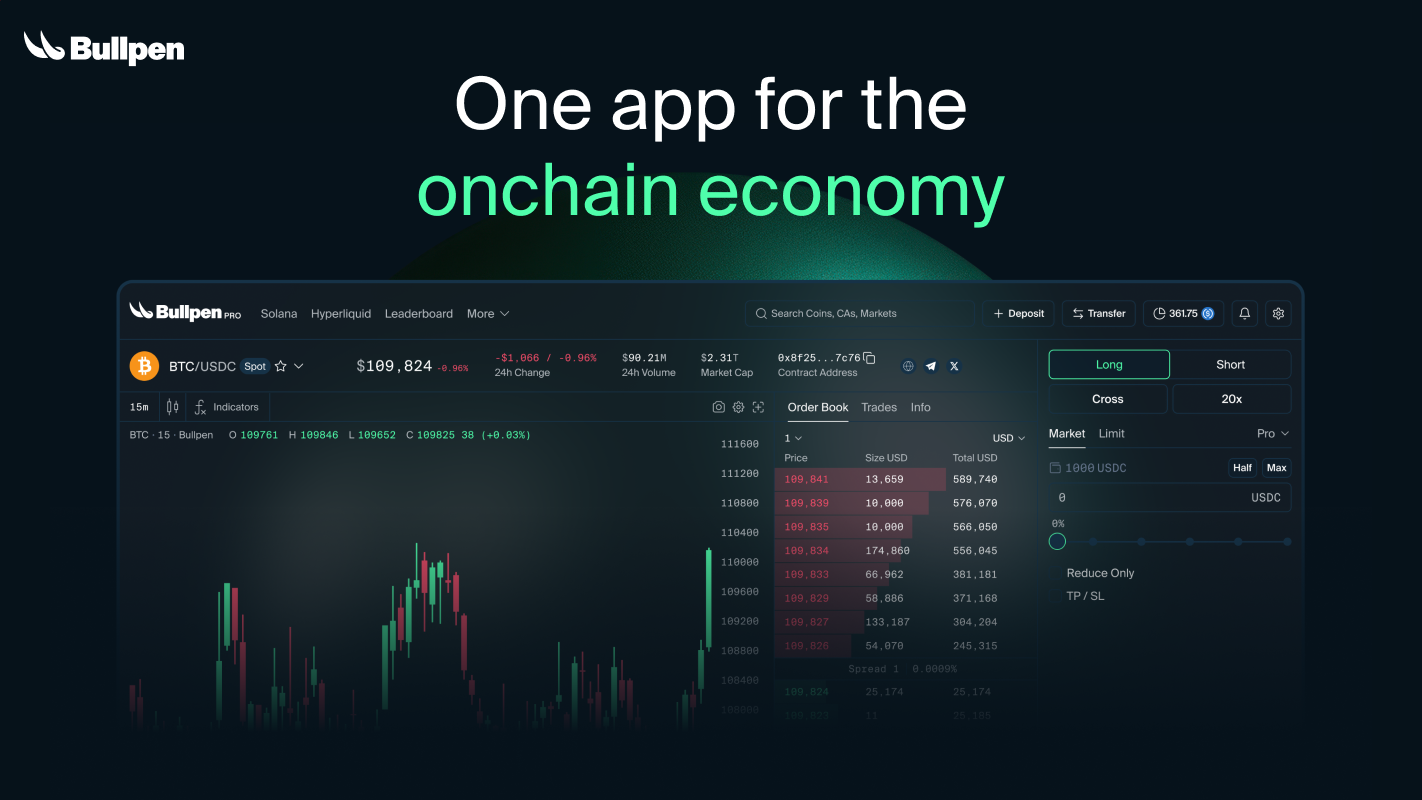
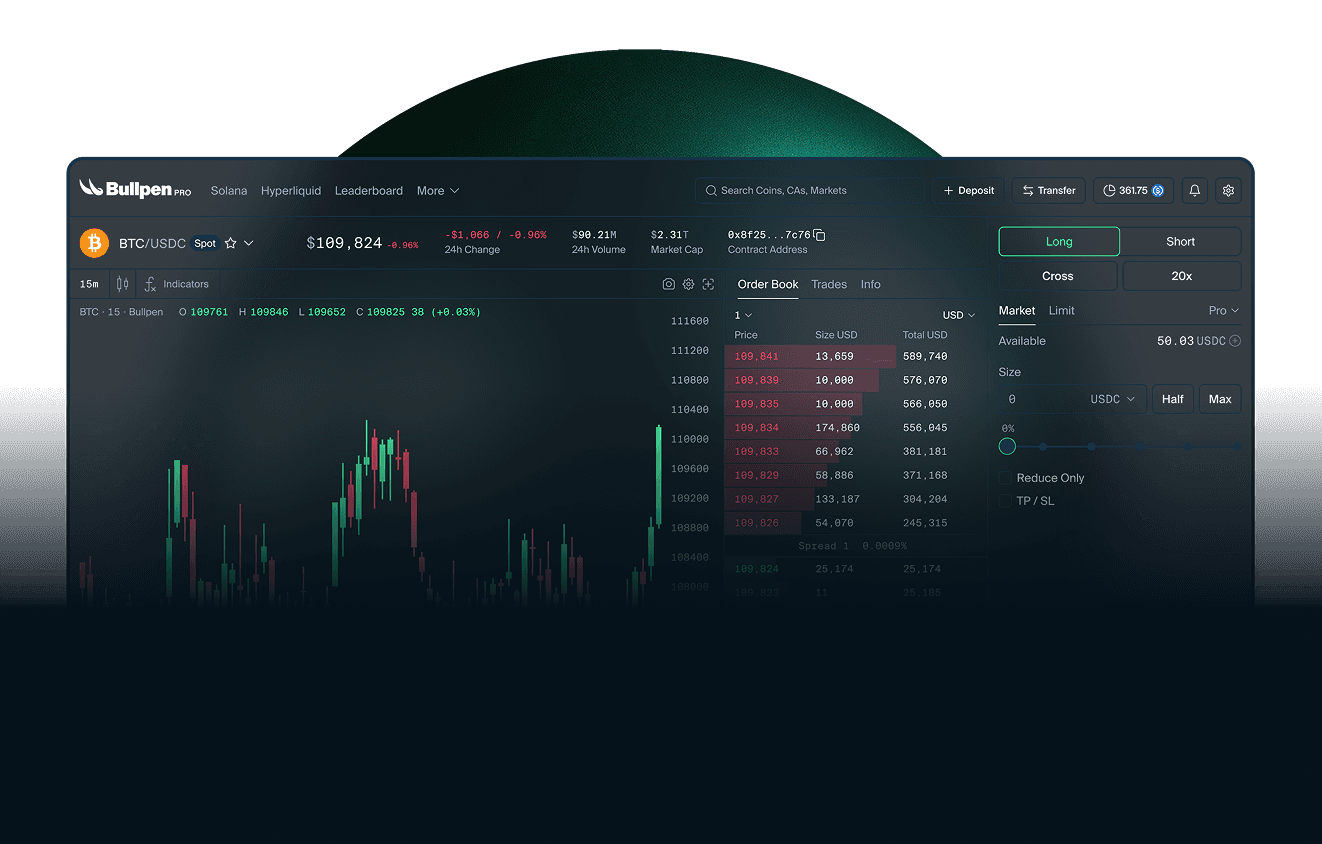
The cleanest workflow starts with the quote, not the chart candle. Check the token, wallet, trade size, expected output, and route before signing. A larger order through thin liquidity needs more attention than a small trade in a deep pair. If the expected output changes quickly between refreshes, the market is telling you that the slippage band and order size deserve another look.
It also helps to separate entry urgency from position conviction. A fast market rewards speed, but execution settings should match the actual trade. A breakout chase has different needs than a planned accumulation order. Bullpen gives the immediate buy path for urgent entries, while limit and DCA orders cover trades that should wait for price or time.
Limit and DCA orders for entries that wait
Not every token trade should fire at the current market price. Limit orders set a price target and wait for the market to reach it. DCA orders split buying into scheduled chunks, which reduces the pressure to pick one exact entry. These order types matter when a token is liquid enough to trade but too jumpy for a single market order.
The benefit is discipline. A trader looking to add exposure during pullbacks sets a limit instead of watching every candle. Someone building a position over several sessions uses DCA to turn timing into a repeatable rule. The execution engine still matters when those orders trigger, because the eventual swap faces the same route, fee, and slippage conditions as a manual buy.
Signals that lead into the trade screen
Discovery is tied directly to execution. Runners highlight tokens that break out before they trend more broadly on X. Whales tracks smart-money inflows and large-wallet buying activity. Hyperliquid Insights adds context for perps traders through net positioning, open interest, and volatility metrics. The token trader uses those signals to decide what deserves a quote, then moves into the swap flow without changing tools.
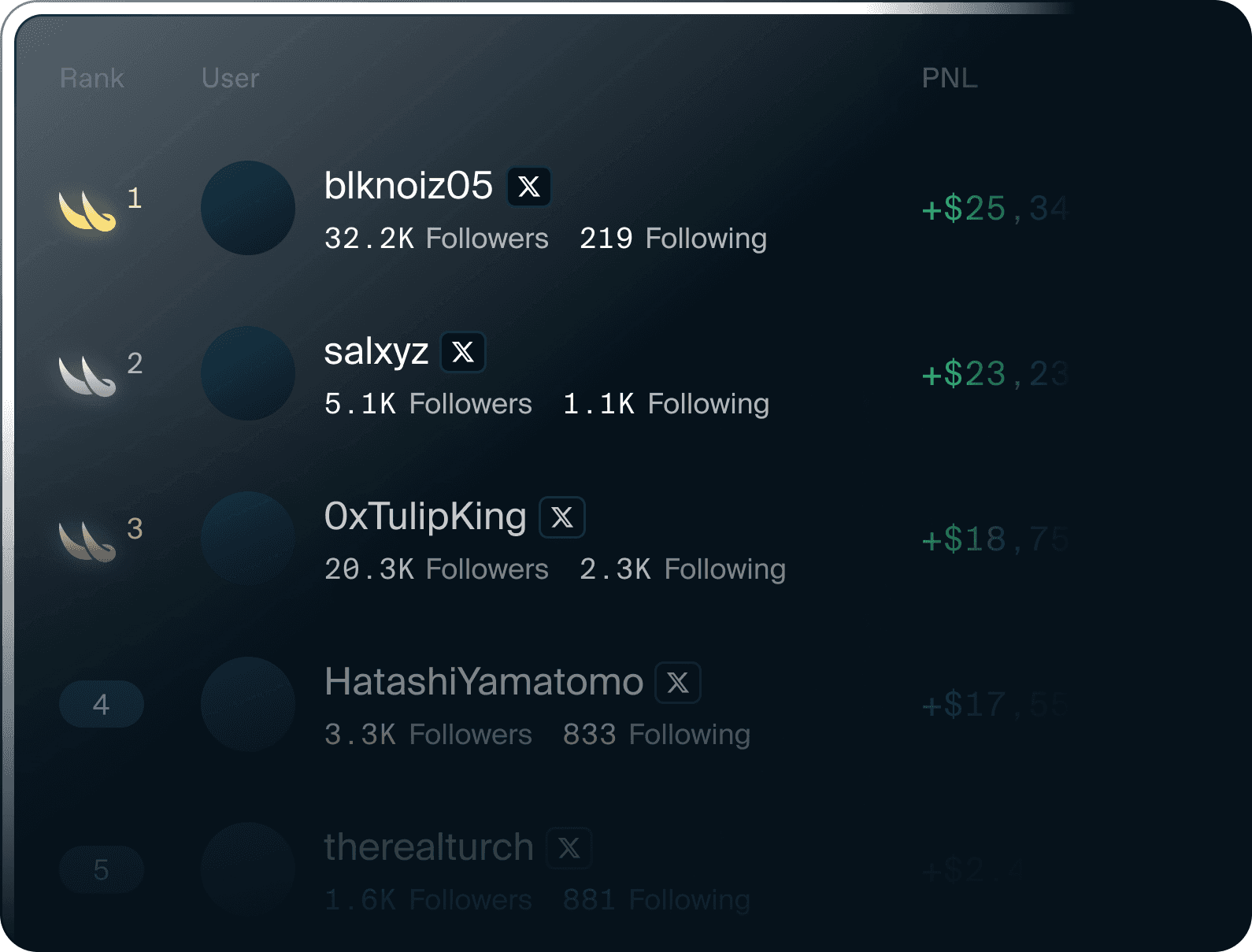
This is where Bullpen differs from a plain swap aggregator. The app does not leave discovery, wallet observation, order entry, and social proof as separate browser tabs. It brings them into a trading loop where the signal appears close to the action. That is useful when the edge comes from noticing flow early and acting before the crowd reprices the token.
MEV protection and fills during volatile launches
MEV protection matters when a visible transaction invites sandwiching or other extraction around a swap. The official positioning emphasizes industry-leading MEV protection, and the practical purpose is straightforward: reduce the chance that execution quality is damaged by adversarial ordering. During crowded launches, this concern rises because liquidity is shallow, wallets compete for the same slots, and price moves sharply after large orders.
The trade-off to watch is order size relative to pool depth. Even strong routing and landing optimization cannot make thin liquidity behave like a major pair. Keep the size realistic for the market shown on the quote, especially when buying a token that just appeared in discovery tools.
Wallet setup, bank funding, and mobile alerts
The app supports imported SVM and EVM wallets, so a trader managing Solana assets and Ethereum-style wallets works from one account view. Same-day ACH funding and withdrawals add a fiat on-ramp path without routing everything through a centralized exchange first. Mobile-friendly sessions and real-time notifications keep the browser and phone experience connected when orders, fills, and watched activity require attention.
Once the wallet is connected, the normal sequence is simple: choose the token, review the quote, inspect the route and output, sign the transaction, then monitor confirmation. Advanced order types add another step because the user defines a trigger or schedule before execution. Bullpen keeps those paths under the same interface, which reduces context switching during active sessions.
When Jupiter, Photon, or a centralized exchange fits the job
Jupiter itself remains the direct aggregator choice for traders who want a route-first Solana swap interface with fewer social and discovery layers. Photon is built around fast Solana token trading and chart-driven execution, especially for users who live in new-pair markets. A centralized exchange order book fits large, listed assets where custody, account balances, and conventional limit orders are acceptable for the trader's workflow.
Bullpen makes the most sense when the job combines discovery, wallet signals, social performance, and swap execution in one session. It is less about replacing every venue and more about shortening the path from noticing a token to placing a tuned onchain trade. For active Solana traders, that path is where Jito tips, slippage, routing, and timing become part of the same decision.
Quick answers about Bullpen
What fees affect a Bullpen token swap besides the quoted token price?
A token swap includes the network cost of the transaction, the priority fee used to compete for blockspace, and any Jito tip applied for transaction landing. The route itself also affects the final output because liquidity depth and pool pricing change as the market moves. The app emphasizes fast fills without extractive platform fees, so the main costs to inspect are execution-related values and the swap output.
Does Bullpen require a Solana wallet for Jito tip optimization?
Jito tips are part of Solana execution, so they matter when the trade is landing on Solana through an SVM wallet. The app also supports imported EVM wallets, but EVM chains use different fee mechanics and do not use Solana's Jito tip flow. A user trading Solana tokens should connect the wallet that holds the assets and review the network shown before signing.
Can I place a Bullpen DCA order instead of changing slippage manually?
A DCA order solves a different problem from slippage. It breaks an entry into timed purchases, while slippage controls how much price movement each triggered swap accepts. DCA helps with entry timing and position building; the execution settings still matter when each slice trades. For volatile tokens, both the schedule and the swap boundaries shape the final average entry.
Which trades benefit most from Bullpen priority fee and Jito tip tuning?
The biggest benefit appears in busy Solana markets where many wallets compete for the same token at the same time. Breakout tokens, dip buys after a sharp move, and new liquidity events place more pressure on transaction landing. Quieter pairs with deep liquidity still need a clean route, but they put less stress on priority fees, Jito tips, and slippage settings.
Are Bullpen limit orders charged extra when they execute?
The official site presents limit orders and DCA orders as advanced order types available at no additional cost. When an order executes, the underlying onchain transaction still carries the normal execution costs, including network-related fees and any settings needed for landing. The useful distinction is that the order type itself is not positioned as a separate paid add-on.
Mobile notifications for Bullpen token trades, what are they useful for?
Mobile notifications are useful when a trader watches order activity, fills, wallet signals, or market movement away from the browser. They pair well with limit and DCA orders because the user does not need to stare at the screen until a trigger fires. They also help when following whale flows or breakout signals that call for a quick quote review.