Practical guides
Bullpen is a trading app for Jupiter Ultra swaps, Hyperliquid perps, and prediction markets
Bottom line: All-in-one crypto trading app for tokens, perps, and prediction markets, with Jupiter Ultra and Hyperliquid execution in one interface.
Bullpen is a unified onchain trading app for token swaps, perpetual futures, prediction markets, and social trading discovery. It combines Jupiter Ultra execution for swaps with Hyperliquid perps data and execution tools, then adds wallet importing, bank funding, leaderboards, smart-wallet tracking, and one-tap trade sharing. The pitch is direct: trade across the onchain economy from one interface while keeping performance, positioning, and market discovery visible.
Jupiter Ultra execution inside one trading screen
The strongest detail is the execution layer. Bullpen uses Jupiter Ultra, the Solana swap routing system built to optimize fills, transaction landing, slippage, and routing without forcing a trader to tune every parameter manually. That matters most during active markets, where a token can move between the moment a quote appears and the moment a transaction lands.
Priority fees and Jito tips sit in the same execution problem. When a Solana trade competes for blockspace, the transaction needs the right incentive to land without overpaying. The app presents that work as part of the buy flow, so the trader focuses on the pair, size, and timing rather than a cluster of network settings. MEV protection also belongs here, because a cleaner route reduces the chance that an order becomes an easy target for hostile ordering.
Perps data runs through Hyperliquid signals
Perpetual futures bring a different kind of market information. Hyperliquid markets revolve around leverage, net positioning, open interest, volatility, and liquidation pressure. Bullpen places those signals near the trading workflow so a user sees more than a last price. Net long or short positioning shows where crowded risk sits, while OI helps separate thin moves from activity backed by fresh capital.
That pairing makes the app useful for traders who move between spot tokens and perps during the same session. A meme coin can break out on Solana while major crypto perps are showing stress or strength. Seeing both views together helps a trader judge whether a move is isolated, narrative-driven, or part of a broader risk-on market.
Runners and Whales turn discovery into a live feed
Token discovery is usually the messiest part of onchain trading. Prices move before social feeds agree on the narrative, and the first useful signal is rarely a polished chart. The Runners feature is designed around breakout tokens, highlighting assets before they dominate X. It is a discovery surface for momentum, not a research report.
Whales adds another angle by tracking large-wallet inflows and showing what bigger accounts are buying. This does not turn a wallet into an oracle; it turns transaction flow into a signal that deserves context. A large wallet entering a token, a surge in volume, and a cleaner execution route together form a stronger setup than any one signal alone.
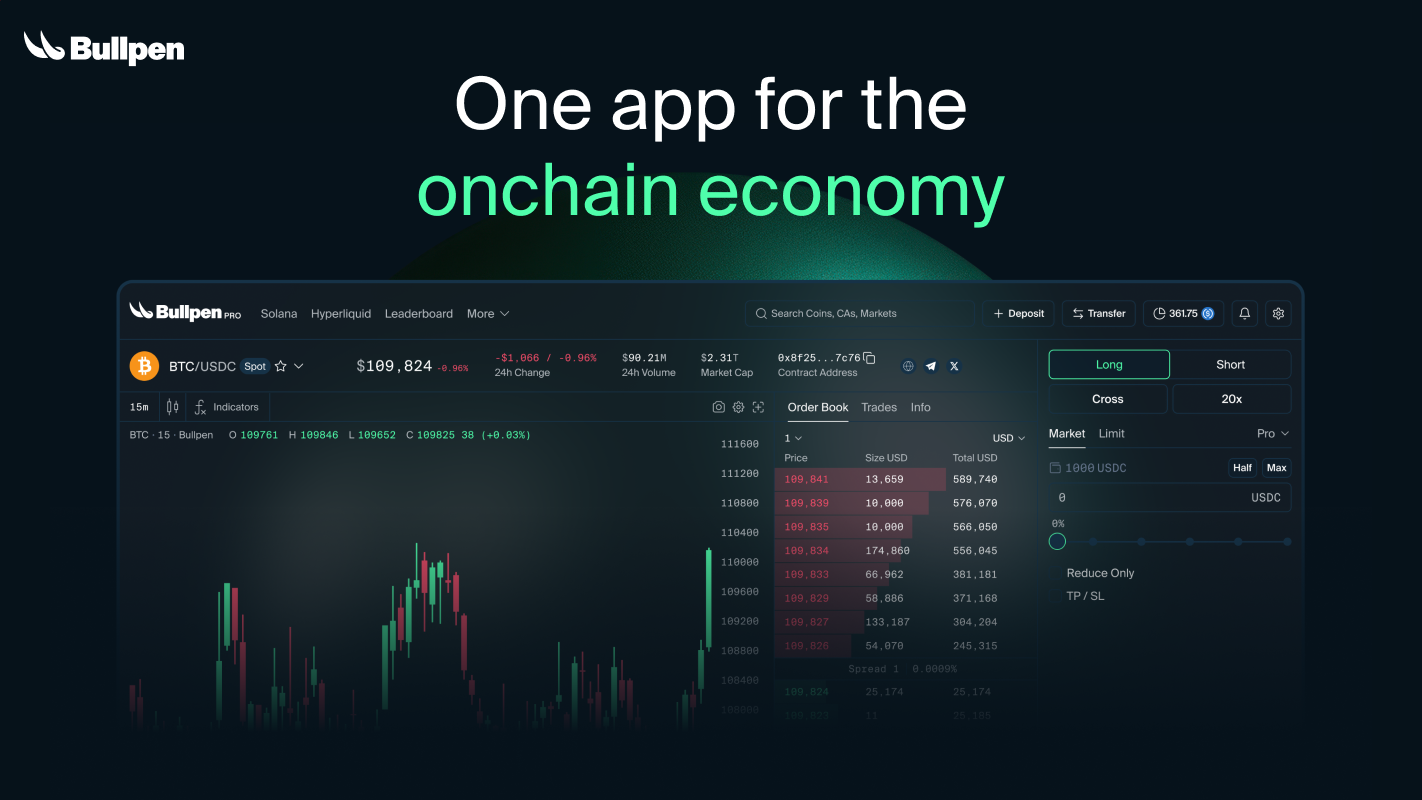
Limit and DCA orders make the app less dependent on perfect timing
Advanced order types matter because active trading is not only about clicking buy at the current quote. Bullpen supports limit orders for entering at a chosen price and DCA orders for spreading purchases across multiple executions. Those tools fit different moods: the limit order waits for a level, while DCA breaks a decision into smaller scheduled entries.
These order types are especially useful in volatile token markets where one market order creates avoidable slippage. A trader trying to add exposure after a pullback can place a limit order below the current price. Someone building a position over time can use DCA orders instead of returning to the screen every few minutes. The official positioning says both are available without an added platform charge.
Wallet imports cover SVM and EVM users
The app is built for traders who already hold assets across chains. SVM wallets cover Solana-style accounts, while EVM wallets cover Ethereum-compatible networks and their address model. Importing both wallet types into one place gives the trading interface a broader view of balances, positions, and usable capital.
This matters because onchain traders rarely live in one ecosystem forever. Solana token activity, Ethereum assets, Base positions, and perps collateral all compete for attention. Bullpen treats wallet management as part of trading rather than a separate admin task. The useful workflow is simple: connect or import supported wallets, review balances, choose the market, place the order, and monitor position changes from the same session.
Bank funding and mobile sync shorten the path to an order
Funding is part of execution even when it happens before the trade. Same-day ACH support gives users a bank-to-app funding route, which reduces the number of steps between a cash balance and an onchain position. The value is practical: fewer hops mean fewer delays, fewer transfer mistakes, and less time spent moving value through unrelated interfaces.
The mobile experience reinforces that idea. Realtime notifications and browser-session syncing keep trades visible when a user moves away from a desktop. That is important for perps, limit orders, and fast token markets, where a fill, price alert, or position change loses value if it arrives late.
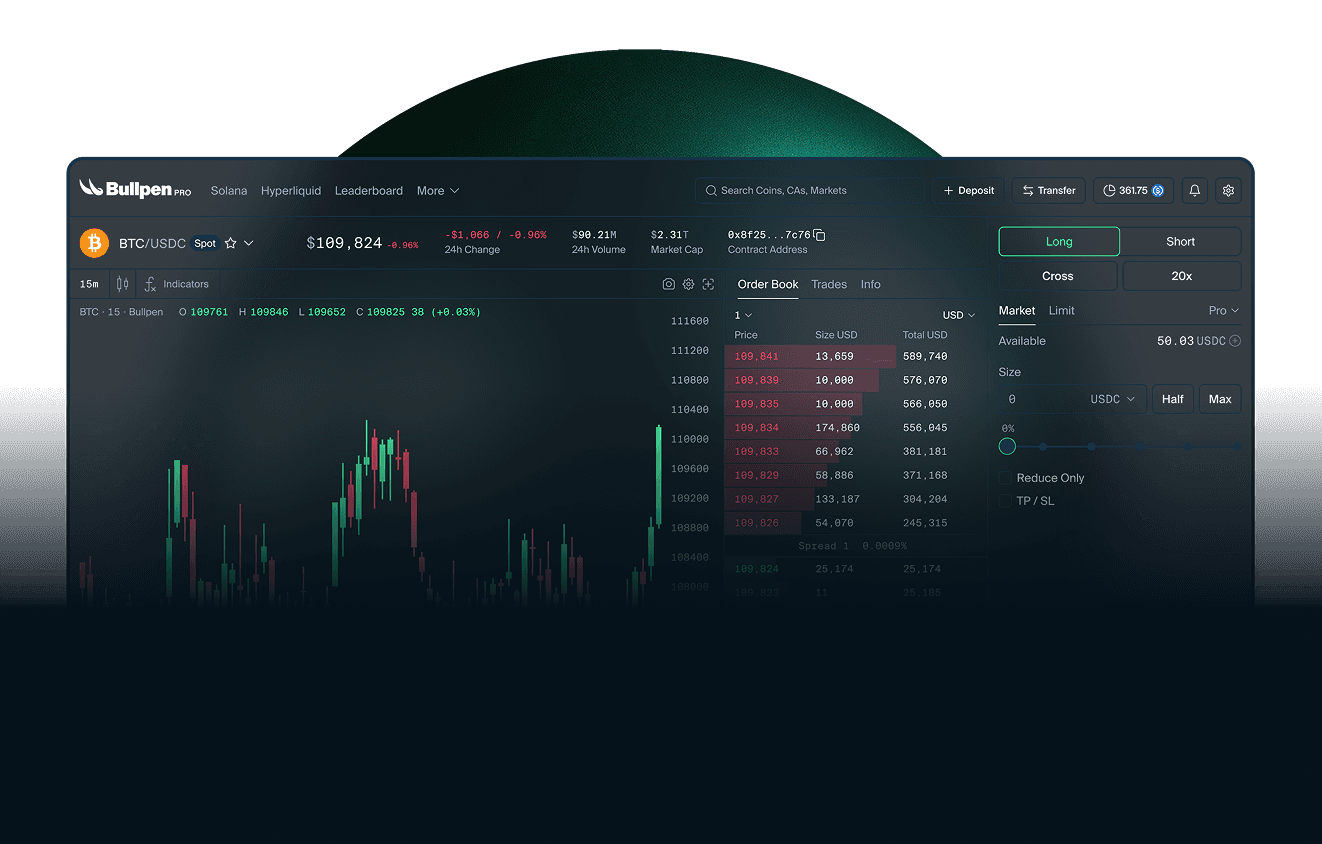
Public performance changes the social layer
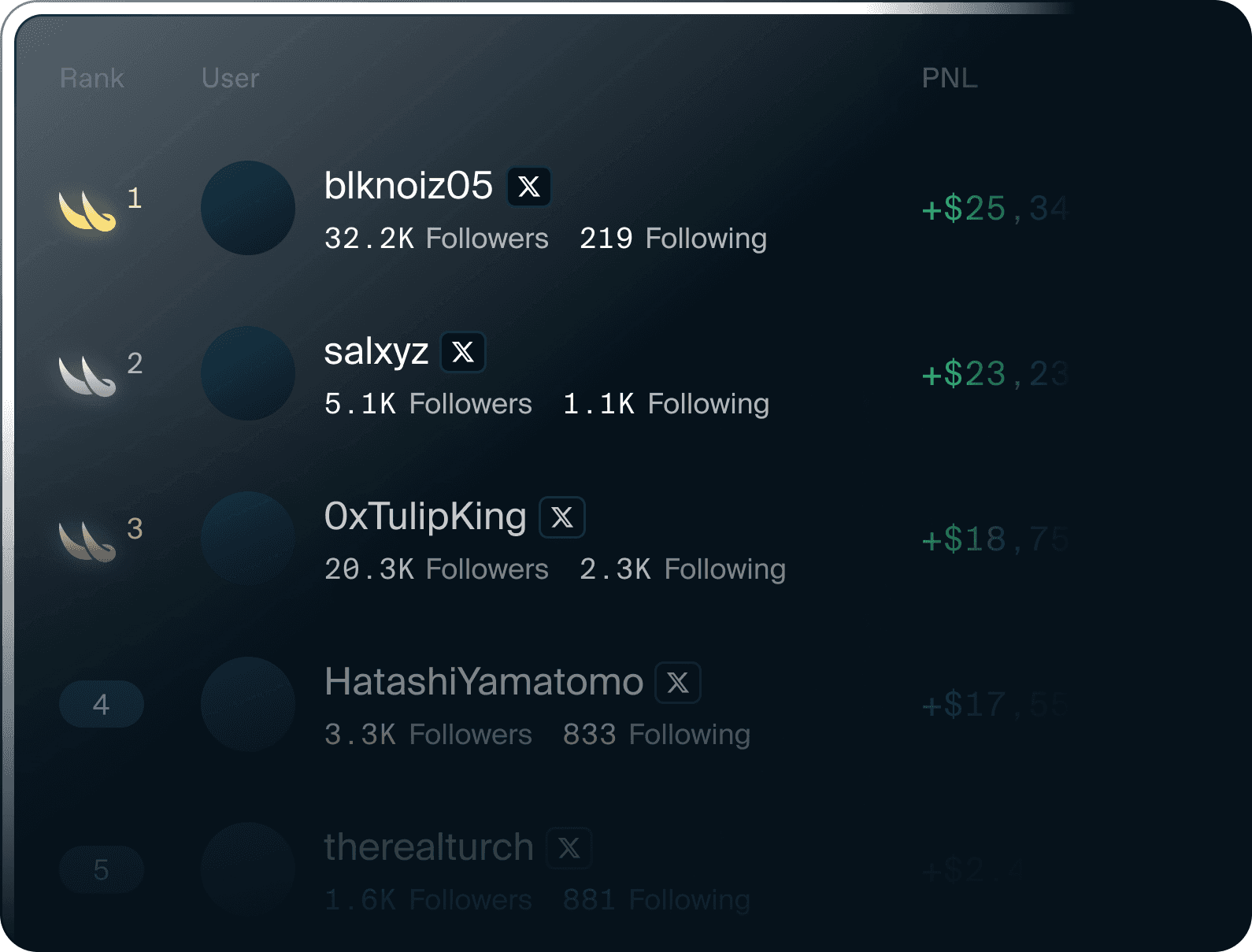
Social trading is more useful when the signal is tied to visible action. Bullpen makes performance public through trader profiles, leaderboards, current positions, and one-tap sharing to X. The $BULL points system rewards sharing alpha, but the more important design choice is tying reputation to trades rather than vague market calls.
A public leaderboard also changes the way users evaluate confidence. Followers can see whether a trader is repeatedly early, lucky once, or taking aggressive risk. Current positions add another layer because they show exposure while the trade is alive. That structure creates accountability around trading claims and makes discovery more competitive.
- Follow traders with visible positions and ranked performance.
- Share trades to X directly from the app.
- Track breakout tokens through Runners.
- Watch large-wallet flows through Whales.
- Use Hyperliquid metrics to read perps sentiment.
Where prediction markets fit in the same interface
Prediction markets belong beside tokens and perps because they trade information rather than only assets. A market about an election, policy event, sports outcome, protocol decision, or macro release gives traders another way to express a view. The same user who watches token momentum might also price the odds of an event that shapes risk appetite.
Putting these markets in the same app gives the interface a broader definition of trading. A user can move from a Solana token to a perp position to an event market without switching mental models every time. The common thread is price discovery: each market shows what participants are willing to pay for exposure to a future outcome.
Costs, slippage, and execution quality deserve attention
The official message emphasizes fast fills, lower cost, and no extractive platform fees. The concrete cost stack still includes the network and market mechanics behind each trade: Solana priority fees, Jito tips where relevant, spread, slippage, funding dynamics on perps, and the order book or liquidity structure of the selected market. The app optimizes the parts it controls, while the market decides the rest.
That is the main risk to understand before trading size. A thin token can move sharply while an order is settling, and a leveraged perp position reacts faster than a spot holding. The cleanest habit is to treat route quality, position size, and exit plan as one decision. Execution tools improve the workflow, but volatility still decides the punishment for being wrong.
When separate apps still make sense
A unified interface is strongest for traders who want speed, discovery, and fewer context switches. Separate specialist apps still have a role. Jupiter remains a direct destination for Solana swap routing, Hyperliquid offers a focused venue for perps-first traders, and wallet apps such as Phantom or MetaMask remain useful for custody, signing, and network-level account management.
The choice comes down to workflow. Bullpen suits a trader who wants swaps, perps context, prediction markets, social rankings, and wallet coverage in one trading surface. A specialist route suits someone who only needs one function and prefers to keep everything else separate. The all-in-one model earns its place when those pieces are used together during real market decisions.
Quick answers about Bullpen
Does Bullpen charge extra for limit orders or DCA orders?
The official product text says limit orders and DCA orders are available at no additional cost. Trades still involve market-level costs such as spread, slippage, network fees, priority fees, Jito tips where used, and perp-related costs such as funding. The important distinction is that the order-type feature itself is presented as part of the app rather than a separate premium add-on.
Can I use Bullpen with both Solana and Ethereum-style wallets?
Yes. Bullpen states that users can import SVM and EVM wallets, which covers Solana-style wallets and Ethereum-compatible wallet models. That is useful for traders who hold assets across ecosystems and want one place to view balances and manage positions. Wallet support does not remove the need to sign transactions correctly, so the connected wallet remains central to account control.
What happens if a swap moves before my transaction lands?
A fast-moving token price creates slippage risk between quote and settlement. Bullpen addresses this by using Jupiter Ultra execution and automatically optimizing transaction landing, priority fees, Jito tips, and slippage in real time. Those tools improve the route and landing process, but a thin or volatile market still moves according to available liquidity and trader demand.
Is $BULL a token or a points system in the app?
The official site describes $BULL as points earned for sharing alpha, especially through one-tap trade sharing to X. It should be read as an in-app points reference unless the project separately announces token mechanics. The page content here treats it as a rewards or reputation layer tied to social trading activity, not as a claim about a live transferable asset.
Which traders benefit most from the Hyperliquid Insights view?
Hyperliquid Insights fits traders who watch perps positioning before entering spot or leveraged trades. Net positioning, open interest, and volatility metrics help show whether a market is crowded, expanding, or unstable. The view is especially relevant for users who trade momentum, hedge token exposure, or want perps context before reacting to a breakout in onchain token markets.
Do I need a centralized exchange account to fund trades?
Bullpen promotes same-day ACH bank deposits and withdrawals, so the funding path is designed to work directly from a bank account inside the app's workflow. A user still needs the required account setup for bank connectivity and supported wallets for onchain activity. The practical appeal is reducing extra transfers before a swap, perp trade, or prediction-market position.